

Click image to enlarge
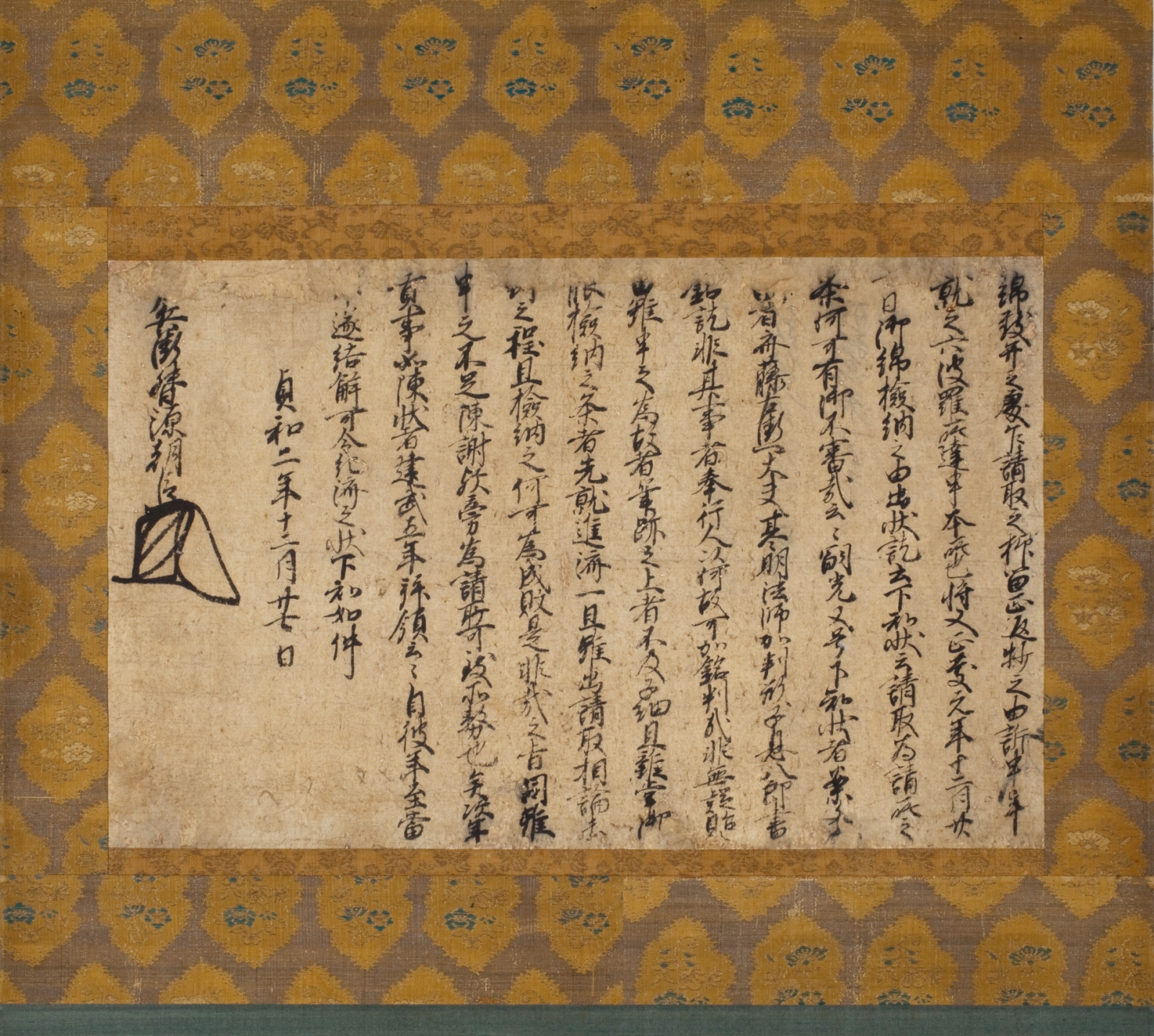
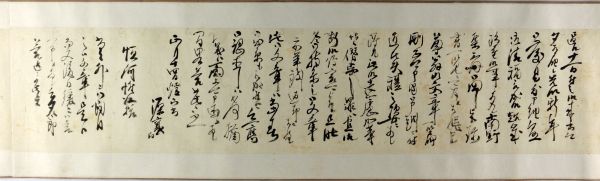
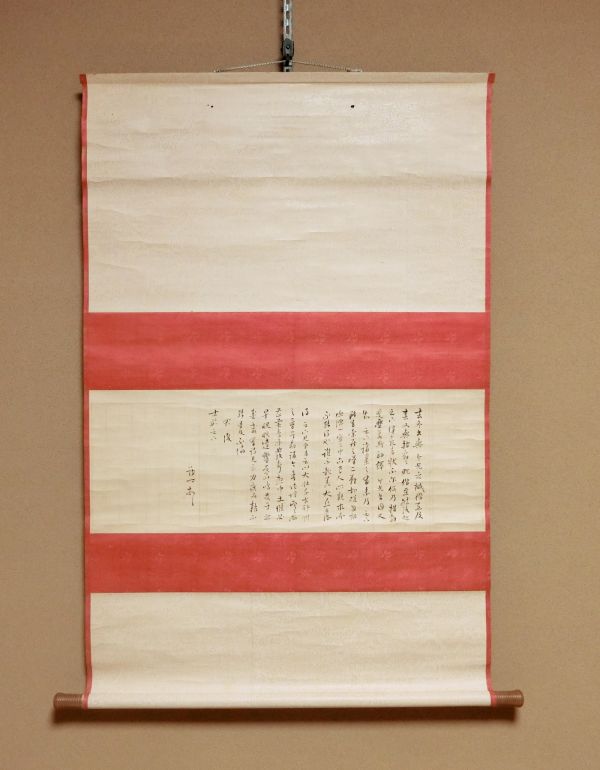
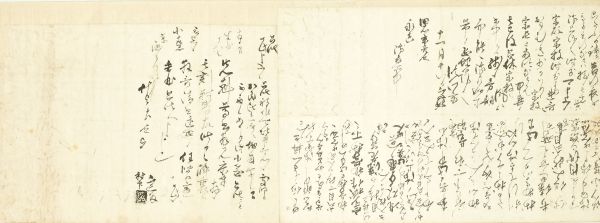
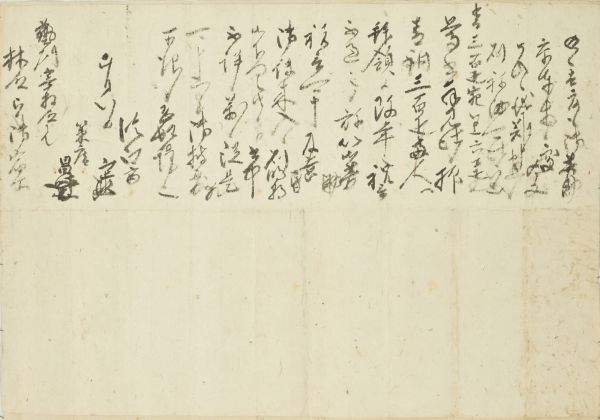
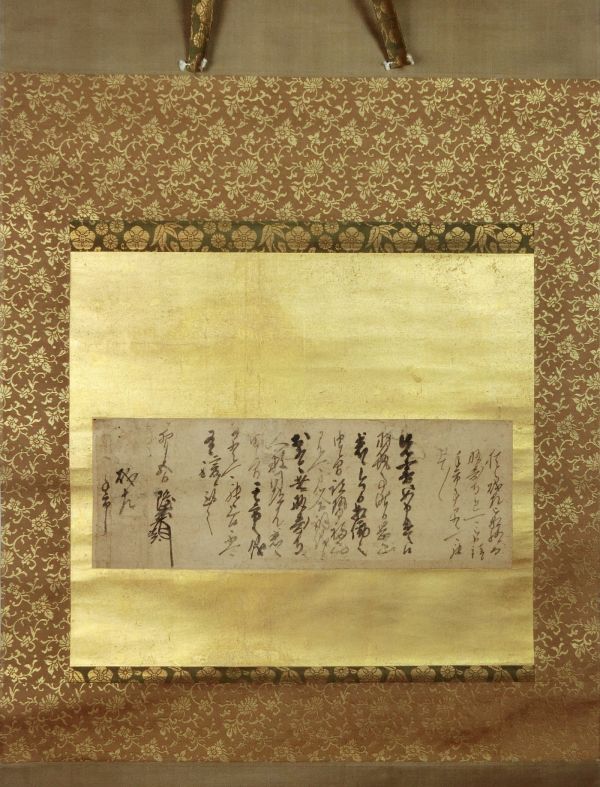
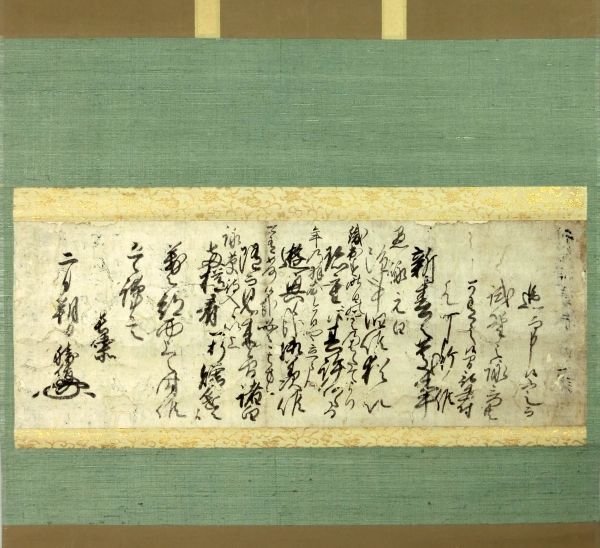
Ashikaga Tadayoshi (1306-1352 , 足利直義) Letter (Official Directive , 下知状)
Dated December 27, 1346
Total117,5×60,2cm Mian30,8×48,5cm
Hanging scroll / Kakejiku
Accessary:wood box
Main paper has folds and damage.
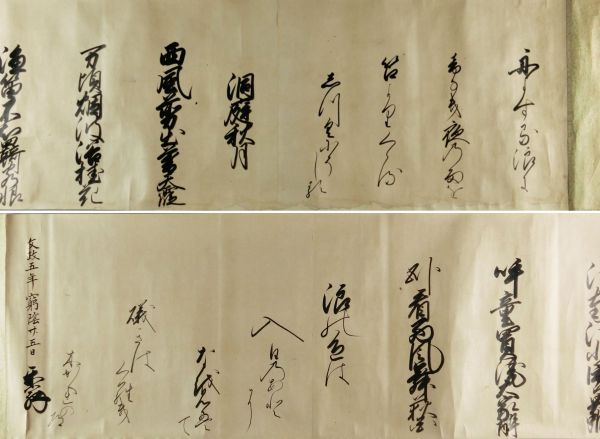
This is a judicial ruling (*saikyojō*) issued by Ashikaga Tadayoshi regarding a legal dispute. As the beginning of the document is missing, the opening section—which would have identified the parties—is lost, leaving both the plaintiff and the defendant unknown. The content concerns the economizing of cotton and the payment of annual land taxes (*nengu*); it appears to be a case in which a *shōen* (manorial) lord brought a complaint against a *jitō* (land steward). In essence, the ruling mandates that cotton be managed under a *ukesho* (contractual management) arrangement, and that annual taxes be paid following a formal accounting. Both the concluding formula and the signature/seal are characteristic of an official directive (*gechijō*) issued by Tadayoshi. This document offers insight into the role Tadayoshi played in handling administrative and judicial affairs during the dual-leadership regime he shared with his brother, Ashikaga Takauji.
[Ashikaga Tadayoshi] A military commander during the Northern and Southern Courts period. He was the son of Sadauji and the younger brother of Takauji (sharing the same mother). He held the rank of Junior Third Rank and served as Commander of the Left Division of the Inner Palace Guards (Sahyōe-no-kami). During the Genkō War, he acted alongside Takauji; under the Kenmu regime, he accompanied Prince Nariyoshi to Kamakura, where he oversaw the administration of the Kantō region. Although he was forced to retreat from Kamakura during the Nakasendai Rebellion, he regained control with the arrival of reinforcements led by Takauji. From that point on, he remained with Takauji until the establishment of the shogunate. Initially, the shogunate’s authority was divided: Takauji held military command, while Tadayoshi managed civil administration, including judicial affairs. Tadayoshi’s policies were modeled after the *shikken* (regent) government of the Kamakura Shogunate; while this garnered support from established regional magnates and powerful religious institutions, it led to conflict with emerging warrior groups in the Kinai region and with Kō no Moronao, who organized the core retainers of the Ashikaga clan. In 1349, a power struggle—sparked by a coup d'état led by Moronao—resulted in a rift between Tadayoshi and Takauji (an episode known as the Kanno Disturbance). Tadayoshi fled to Kamakura but was defeated by Takauji’s pursuing forces and forced to surrender; he died shortly thereafter due to illness—though some accounts suggest he may have been poisoned by Takauji.
【読み】
*Unauthorized reproduction or reprinting prohibited.
Please inquire for price
The title of the work will be
automaticaly entered inf the contact form.
About Purchasing
Please contact us by phone or by clicking the inquiry button on the product page and using the inquiry form.
For security reasons, we do not send automatic reply emails. We will contact you by phone or email within 1-2 business days. You can also visit us and see the actual art work. You can choose to pay by wire transfer or credit card payment. After confirming payment, we will ship the item.








 ">